Sunday, July 27, 2008

I don't know what terrorism means!!!!!!!

Ahmedabad: Army conducts flag marches, toll 45


The army on Sunday staged flag marches in communally-sensitive Ahmedabad where the death toll in the synchronised bomb blasts rose to 45 as several states went into high alert in the wake of terror strikes in Ahmedabad and IT hub Bengaluru.

Ahmedabad Blasts

An activist of outlawed militant outfit Students Islamic Movement of India, identified as Abdul Halim, was arrested in Ahmedabad in connection with the Ahmedabad blasts following a tip-off by the Gujarat police.

The police defused a live bomb found lying in a garbage can in Amraiwadi area in Ahmedabad where army columns conducted flag marches in vulnerable areas to instill confidence among its shaken residents.

In New Delhi, Home Minister Shivraj Patil chaired a high-level meeting to review the security scenario in the country and assured all possible help to the Narendra Modi government in its hour of crisis.

Prime Minister Manmohan Singh, who is likely to visit Ahmedabad on Monday, was briefed by Patil, National Security Adviser M K Narayanan and top officials of the home ministry on the security situation in the country.

In Navi Mumbai, Maharashtra Police's Anti-Terrorism Squad raided an apartment in the Palm Beach Road area and seized a computer in connection with the probe into the e-mail sent to TV channels purportedly by a little-known 'Indian Mujahideen' threatening more blasts in the country.

With seven more people dying overnight, the death count in the serial blasts in Ahmedabad rose to 45 on Sunday, Gujarat Health Minister Jainarayan Vyas said.

The number of injured was 145, he said after a Cabinet meeting presided over by the chief minister.

Several states, including Uttar Pradesh, Madhya Pradesh, Delhi, Himachal Pradesh and Uttarakhand, sounded red alerts heighting vigil in sensitive areas.

The army conducted flag marches in sensitive Madhupura and Asarva areas in Ahmedabad, which was still coming to terms with the multiple blasts that tore through crowded places in a span of 70 minutes.

"As a precautionary measure, the army has been called out and is conducting flag marches in vulnerable areas," Additional Commissioner of Police Mohan Jha said.

Right now, the situation was under control, he said adding the army had not been deployed anywhere in the city.

The Gujarat police conducted raids overnight and detained a number of people in connection with the serial blasts.

They said preliminary investigations revealed that ammonium nitrate was used as an explosive material in the bombs, adding LPG cylinders were also used to increase the impact of the blast at the Civil Hospital.

Joint Commissioner of Police (Crime Branch) Ashish Bhatia said the investigations had been handed over to the crime branch.

He said the bomb that went off at hospital's trauma centre was kept in a car.

Bhatia, however, said police had not found any evidence so far to suggest the involvement of a suicide bomber in the hospital blast.

On the searches at the Navi Mumbai flat this morning, a Mumbai ATS officer said, "We are verifying personal details of the individual living there."

Wednesday, June 25, 2008

Basic bug!!!!

TO(I)LET FACILITY :

Sanitation is India’s biggest problem. 700 million people have no toilets in their homes. In slums, there are no toilets. So a huge population has to use open areas to answer nature’s call. India today has nearly ten million bucket toilets that are manually cleaned by scavengers. We cannot let his continue. 700,000 children die every year due to diarohea and dehydration caused by poor hygiene. Many schools in rural India do not have toilets and this is one of the main reasons why girls dropout from school once they cross the primary level. Can we let this continue?

Gandhiji drew attention to the problem of sanitation, but we did not have the technology at that time to figure out how to go about building easy to build and maintain toilets in India. The British built the first sewerage system in India in 1870. After 130 years, out of 4,500 cities only 232 are sewer based. Only 20 per cent of the urban population has septic tank toilets.

The challenge for India is huge. The sewers in Delhi, for instance, were designed for a population of three million. Delhi now has a population of 14 million. The challenge is to provide appropriate, affordable and culturally acceptable toilets. It sounds difficult, but it is possible.

Sulabh has now come up with a compost flush toilet that has two pits. One can be used at a time. When one is full, the other can be used while the first one is quickly turned into fertilizer. It is built in such a way that it requires only two litres to flush it while a conventional toilet needs as much as ten litres. This is the best design for India. Instead of a septic tank, we have now come up with a biogas digester that will convert human waste to gas that can be used for cooking and also to produce electricity. The wastewater discharged from toilets contains nutrients like phosphorous and so if we pass this water through charcoal and ultra violet rays, it will be ideal for agriculture as there will be no coliform, no pathogens and no bacteria.

Tuesday, June 24, 2008

LOAD TEST THE SOIL!!!!!!!!

SOIL POLLUTON IN GUJARAT:
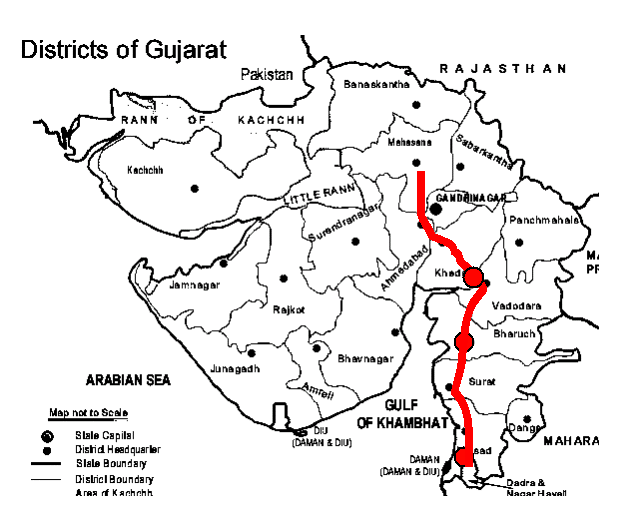
The Paryavaran Suraksha Samiti (PSS) did several investigations in December 2000 and April 2001 in the industrial estates around the towns of Ankleshwar and Vapi. The map below shows the industrial corridor, the three round spots indicating, from top to bottom, the towns of Nandesari, Ankleshwar and Vapi.

Courtesy Paryavaran Suraksha Samiti PSS was formed over four and half years ago to highlight attention to the indiscriminate industrialization, dumping of hazardous industries that were being phased out of Europe and the US, in Gujarat and all over India, and problems arising therefrom. Creating awareness among affected people about the threat to human health and environment from such chemicals, and organizing them to assert their right to decide in matters directly affecting them and their children's future have been our focus and priority. Environmental concerns are no more limited to protecting wildlife or exotic plant species in the Pacific Ocean or Antarctica but have all to do with people's life and livelihood, the very resources life depends on.

Members of PSS are also involved in working with tribals for a sustainable lifestyle, on alternative technology, Gandhian movement and networking with other organizations.

The golden corridor in Gujarat extends from Vapi in the south to Ahmedabad in the north. While this is a golden corridor from the point of view of the industry (because of good transport and communication infrastructure, large pool of cheap and unorganized labor availability), it is a dark and dangerous corridor for the people living near the industrial estates. There are over 50 industrial estates in this region, most house over a thousand industries (some being chemical estates) and many are spread over a thousand acres.

People living inside the industrial estates and in villages surrounding the estate cope with extreme amounts of air, water and soil pollution as well as bad health infrastructure. Monitoring and regulation by the Gujarat Pollution Control Board is practically non-existent and availability of information about the pollution or its 2 health effects on the residents is scarce and whatever there is, is not shared with the affected communities.

PSS has been conducting investigations in and surrounding industrial estates to find pollution hotspots and look at the effects this is having on communities living around these estates. A preliminary investigation in communities living around Ankleshwar in 1998 had found over 65 polluted groundwater sources. This led us to do more detailed (though not exhaustive) surveys in these communities.

During an investigation around Ankleshwar industrial estate in December 2000, we found over 120 polluted ground water sources affecting a population of over 100,000 in about 50 communities. This was by no means an exhaustive investigation. Many communities often had to use polluted water since no reasonable alternative source existed or it was too far. A similar investigation in Vapi in April 2001 found over 60 polluted sources affecting a population of over 30,000 people.

Courtesy Paryavaran Suraksha Samiti Picture: Casual labourers wash themselves in an irrigation canal after a day at a dye factory in Vapi industrial estate. Such labourers have routine complaints of nausia, skin rashes, burning sensation, digestive tract problems, respiratory tract problems and other longterm diseases. They are the Red Men of the Golden Corridor. .

Red, Blue, Yellow or Green effluents flowing in open channels is a common sight in both the estates. Even men and women colored red or dark blue or green are easy to find. Hazardous solid waste dumped on common lands surrounding the estate is the way to get rid of substantial quantities of such waste (even though both estates have lined landfills). Amla khadi (a rivulet flowing through the industrial estate) in Ankleshwar carries extremely toxic, often acidic, dark brown or black effluents around the year. Bil khadi (a rivulet flowing through the estate) in Vapi mostly carries dark red acidic effluents (but sometimes green or black as well) almost all around the year.

There have been some investigations and effluent analysis done by other agencies. Gujarat Pollution Control Board does basic tests but does not share them with affected people at all. There have been no extensive studies to characterize the effluent or to find what harmful pollutants exist in contaminated ground water.

Down To Earth magazine (one of the respected magazines on environmental issues in India) did an analysis of groundwater and found high amounts of mercury, lead and zinc. Adjacent table is directly reproduced from Vol. 8, No 7 August 31, 1999 magazine. It can be seen from the table, mercury in Ankleshwar groundwater is 118 and 176 times the WHO standards and in Vapi it is 96 times!

Dr. Avnesh Sharma's doctoral thesis "Environmental Impact Assessment Along the Effluent Channel from Baroda to Jambusar and At Its Confluence with Mahi Estuary at the Gulf of Cambay with Special Reference to Heavy Metals" has found that grains like maize, wheat, millet and vegetables like tomato, cabbage, green peas, bitter gourd, green chillies, drumsticks, cauliflower, egg plants contain twice to 60 times more heavy metals (like copper, chromium, cadmium, zinc, nickel, lead, iron etc) than non-contaminated ones in the control area.

Greenpeace has done two investigations of the area. They found a lot of persistent organic pollutants including some carcinogens in the effluents as well as sediments of rivers.

A 1994 survey of [only] seven largest of the more than 100 industrial development estates estimated annual hazardous waste production to be 220,381 tons per year and projected growth to be more than 3.5 million tons per year over the next 15 years. If the pollution control board can not deal with the existing 0.22 million tons of waste, a rise by 3.5 mn tons every year will cause unprecedented problems. And the time to act is now.

It is obvious from all these reports and the following pictures that the Gujarat Pollution Control Board does not do good monitoring and probably does not test for all pollutants as well.
As an effect of this pollution, people are suffering skin ailments, respiratory problems, headaches and we are sure that there are other related illnesses, which have not been noticed, as they have not been investigated.

Monday, June 23, 2008

WAT THE LAWS ARE FOR????????

JUST LAWS!!! EVERYONE BREAKS!!!!

The Prevention of Food Adulteration Act, 1954 aims at making provisions for the prevention of adulteration of food. The Act extends to the whole of India and came into force on 1st June 1955.


WHAT IS ADULTERATED FOOD?

An article of food shall be deemed to be adulterated -
  1. if the article sold by a vendor is not of the nature, substance or quality demanded by the purchaser or which it purports to be;

  2. if the article contains any substance affecting its quality or of it is so processed as to injuriously affect its nature, substance or quality;

  3. if any inferior or cheaper substance has been substituted wholly or partly for the article, or any constituent of the article has been wholly or partly abstracted from it, so as to affecting its quality or of it is so processed as to injuriously affect its nature, substance or quality;

  4. if the article had been prepared, packed or kept under insanitary conditions whereby it has become contaminated or injurious to health;

  5. if the article consists wholly or in part of any filthy, putrid, disgusting, rotten, decomposed or diseased animal or vegetable substance or being insect-infested, or is otherwise unfit for human consumption;

  6. if the article is obtained from a diseased animal;

  7. if the article contains any poisonous or other ingredient which is injurious to health;

  8. if the container of the article is composed of any poisonous or deleterious substance which renders its contents injurious to health;

  9. if the article contains any prohibited colouring matter or preservative, or any permitted colouring matter or preservative in excess of the prescribed limits;

  10. if the quality or purity of the article falls below the prescribed standard, or its constituents are present in proportions other standard, or its constituents are present in proportions other than those prescribed, whether or not rendering it injurious to health.

SEA FOOD ADULTERATION!!!!
Seafood industry of Asian countries is in the threat of ban on their export of seafood to Canada as a recent report of imported seafood from Asian countries had the banned chemical Malachite green in the fish tissues.//

Critics feel that the Canadian Food Inspection Agency should follow strict stringent rules and should test all batches of imported seafood coming into the country for the presence of Malachite green and its byproducts. Consumer Association of Canada feels that the consumers should be aware of the risks of eating Malachite green.

Indian Export: Export Inspection Agency of india (EIA) is responsible for testing and surveillance of adulteration of seafood. EIA conducts monthly inspection of the aquaculture ponds and each batch of frozen seafood products before exporting to other countries. Malachite green and microbial contamination is tested by EIA laboratories before certifying the product for export.

Malachite green: Malachite green is an inexpensive and effective preservative which is used by fishermen for preservation of aquaculture products from contamination of fungus growth during storage and travel. Leucomalachite is the product of malachite green which persists in fish tissues for long periods. In 1992, the Canadian Government found that Malachite green may cause cancer in the consumers and ordered that seafood should not contain malachite green and even a very minimum quantity of malachite green in fish was considered as adulterated food.


Sale of adulterated sweets unabated !!!!
Don’t get fancy ideas over a box of beautifully packed sweets bearing the name of a reputed ‘halwai’ shop or a well laid out dish in a roadside eatery, or even for that matter, a good restaurant in an upmarket commercial area in the city.

A piece of mouth watering sweet or a lavish dish one might consume after paying a hefty price, can in fact, turn out to be a grave health hazard if the unrestrained adulteration, poor hygienic conditions of the kitchens and workshops, along with lack of other basic public health safety measures prevailing in the city, are any indication.

With the festive season at its peak and the hoards of sweet sellers here about to rake in tonnes of money on Divali which is just two days away, the danger to the health of people due to the consumption of adulterated and poor quality sweets, confectionary and other food items, has also increased in the same proportions.

If sources in the sweet selling trade are to be believed, the haul of 3.5 tonnes of ‘khoya’ seized a couple of days back, is not even the proverbial tip of the iceberg. Even the conservative estimates of sale of sweets during the festivities around Divali in the city, are put at several hundred tonnes, with the preparation of different varieties of sweets and confectionary items commencing a fortnight before.

Doctors in various hospitals here point out that due to a long gap between the preparation of sweets and their consumption, coupled with poor quality of inputs and unhygienic conditions prevailing in most of the workshops of ‘halwais’, the consumption of such food items can lead to serious gastric disorders and, at times, even cancer of the intestines.

Officials of the Health Department, as well as the civic body, as is their wont, continue to pay just lip service to the task of enforcement and regulation, assigned to them while those wreaking havoc on the health of people keep making money at the expense of unsuspecting customers.

A majority of the people from different walks of life whom Ludhiana Tribune talked to on this subject were of the opinion that the so-called procedure of sample taking from sweet shops and other eating joints was a mere eye wash. “The officials responsible for keeping a check on food adulteration seem to be in league with the defaulters. If that was not the case, why do they target only small venders while the big shark continue to thrive,” they wondered.

PFA ADDED SOME BRANDS TO ADULTERATED!!!

Prevention of Food Adulteration (PFA) Department today added government-brand Dhara to their list of adulterated mustard oil brands, after it tested argemone positive.

With 109 more seriously ill patients being admitted today to government hospitals, Delhi Health Minister Harsh Vardhan declared, ``Not just argemone seeds, the culprits (manufacturers, suppliers and traders) were using mobil oil to adulterate edible mustard oil.''

PFA office at Lawrence Road -- the department with an official brief of acting on complaints of dropsy-effected residents of Delhi and raiding outlets selling mustard oil -- was understaffed today when an Express Newsline team came visiting. Their control room, the telephone number of which is being continuously advertised in newspapers and highlighted at the Delhi government's press conference for registering complaints, was unmanned.

A stenographer working at a nearby table said the telephone line was out of order. ``We cannot seem to receive calls here. We do not know what action has been taken on the reported cases. It is for the police to take action'', she said.

PFA director Ashok Baxi was busy conferring with his colleagues on the official number of samples tested and those found adulterated. The PFA figures for today were: 187 picked up; 110 tested and 49 adulterated.

Baxi was also caught in the midst of issuing a notification banning loose mustard oil in Delhi following yesterday's Delhi High Court order.

``Under Section 7(4) of the PFA Act, the department is issuing a notification for temporary ban of sale of loose mustard oil and also directing the manufacturers not to make 220 gm polypacks,'' Baxi said.

The department is, however, not acting on the Delhi Chief Minister's order to ban the sale of all mustard oil loose or packed. The CM had yesterday put the onus of enforcing the ban order entirely on the PFA.

Defending his position, Baxi said: ``We, the PFA, the LG's office and the Delhi Government, are all issuing separate notifications. We are going to take up the cases of adulteration separately at the special PFA court in Patiala House. Tomorrow 12 cases will be filed.''

Besides issuing notifications and filing cases, the PFA does not seem to be doing much. A mill situated opposite the PFA office, which manufactures mustard oil under the brand name Pan: Pure Mustard Oil, was raided as late as last Sunday when none of the owners were present at the premises.

``We had already stopped production, because nobody is buying loose oil. We supply 15 kg for Rs 770 to retailers in packed tins, which are then sold loose,'' said Mahavir Singh, one of the owners. Inside the factory, however, mustard oil tanks were full to their capacity. The stock -- which could be adulterated -- was never seized or tested by the PFA, and the manufacturer is waiting for the crisis to tide over to release it in the market.

After the oil is extracted from the seeds, the leftover is sold as cow-fodder. Several sacks of the fodder lying in the store had also not been tested for argemone adulteration. Advertised as a hi-tech factory on its brand-label, the unit is seedy and working conditions unhygenic. Even if mills are not manufacturing oil for the time being, allied production activities are in full swing. In the open space right next to the PFA office, truckloads of mustard seeds were being sifted.

``Here good-quality mustard seeds are mixed with inferior-quality seeds, before being supplied to nearby oil factories,'' revealed one of the workers, before being shushed and scolded by the contractor on duty for talking too much


Amway comes under scanner of Drug Control authorities


AMWAY India, wholly-owned subsidiary of the US-based Amway Corporation, has been caught in a controversial situation.

The company has, for the second time, come under the scanner of the Drug Control Authority at least in one state - Kerala — for allegedly selling some of its products under violation of existing food and drugs laws. According to Mr M.P. George, Assistant Drugs Controller, Intelligence Branch, Kerala, Amway India has been selling some of its products as either `food supplements', `nutritional supplements' or `dietary supplements', without obtaining the necessary licences.

"In India, currently, there is no legal entity categorised as a `nutritional' or a `dietary' supplement, either under the Prevention of Food Adulteration Act or any other relevant Act. However, Amway has all along been selling these supplements, which leads to violating of the existing norms," Mr George told Business Line.

However, at the same time, Amway India has obtained a stay from the High Court of Kerala, Ernakulum, directing the Drugs Inspector, Office of the Assistant Drug Controller, Ernakulum, and the Drug Controller, Kerala, not to interfere with the manufacture, storage, distribution and sales of the dietary supplements by Amway.

According to a statement provided by Amway to Business Line, the High Court has passed this interim order while hearing a petition filed by the company. The petition was filed pursuant to the action of the Assistant Drug Controller's office, Ernakulum, last month.

Prior to this, the Drug Control Authorities in the State had raided Amway's Cochin office, seizing some dietary supplements and cosmetic products. "The Dug Control Authorities seized these products on the presumption that they were drugs or medicines and hence required a drug license for sale thereof," according to the Amway statement.

Reacting to the High Court directive, Mr George said, "While the High Court has stayed proceedings against Amway which allows the company to continue selling its products as earlier, we will do whatever we can under the ambit of the law. For example, if Amway begins selling more products under the same category, we will again conduct raids."

The communiqué from Amway adds that a similar petition is pending before the High Court of Kerala, when a couple of years ago, the Drug Control Authorities had seized some other nutritional products on similar presumptions. "Amway had challenged the action and the court granted a stay, which still continues. The court had also directed the Drug Control Department to file their reply and get the samples of the products in question analysed. It has been more than a year and nine months since then, and the concerned drug authorities are yet to get the samples analysed as directed by the High Court," said the Amway statement.

Sunday, June 22, 2008

kill thy bug!!!!!

Case studies of Andaman Island, Uttara Kannada
and Gadchiroli – Chandrapur, India.

A Large part of India like most other parts of South Asia and for that matter the rest of the world were till recently covered with thick forests. This region is probably best known for the civilisations that flourished in the valleys of its great rivers like the Ganga, the Yamuna and the Indus after which the country is named. These were civilisations that reached a high degree of sophistication, and urbanisation. What is much less known is that there are innumerable, small, vibrant, diverse and extremely sustainable forest cultures that survive and flourish even today in the areas where the forests still exist. Across India one has also seen many people’s movements where communities have voluntarily come together for the purpose of conservation or in response to environment and ecological crises.

The first part of the case study mentions that although there is evidence of deforestation even in pre-colonial India, especially due to the expansion of agriculture, it has been shown beyond doubt that the large scale destruction of the forests was started by the British, India’s colonial rules. The author also states that many environmental historians hold the opinion that the large scale destruction of the forests in India is rooted in the commercially oriented forest use and ownership policies of the British government which continued even after India gained independence in 1947.

The other major causes of deforestation immediately after independence was agricultural expansion, often state-sponsored. In more rescent times it is new policies and programmes of development; rapid industrialisation, urbanisation and growing consumerism that have resulted in the widescale destruction of the forests. What has been equally bad if not worse is that the development projects very insensitively alienated the communities living in the forests, depriving them of their basic sources of survival, forcing them to move away and in the process making them refugees in their own land.

The paper covers 3 case studies from various parts of India representing different ecological, geographical and social situations. The first case study looks at the situation in one of the remotest corners of India, the Andaman islands. It examines in specific detail the deforestation in the relatively small island of Little Andaman which is also the home of a very small and remarkable, but also threatened tribal community, the Onge. The second case study looks at the district of Uttara Kannada in the Western part of India. One of the most thickly forested districts in the country, it also has a long history of people’s movements for the conservation of the forests. The third study is from the Gadchiroli – Chandrapur district from Central India, which has experienced wide scale deforestation in the past. What is of significance here is the successful initiatives taken by the local communities for the protection and regeneration of the degraded and denuded forests.

Case study 1: Andaman Islands

Prepared by Pankaj Sekhsaria, Kalpavriksh, Environment Action Group, Apt. No. 5, Sree Dutta Krupa, 908, Deccan Gymkhana, Pune – 411004, India
Ph/Fax: 91-212-354239, e-mail: ashish@nda.vsnl.net.in

In the first part of case study of Andaman Islands the author elaborates the details of The Andaman an Nicobar Islands that are considered to be the emergent peaks of a submerged mountain range related to the Arakan Yoma mountain range of mainland Burma. The islands are clothed in thick evergreen forests that are home to a large biodiversity and also have some of the finest mangroves and coral reefs found in the world. The islands are also home to six indigenous tribal communities; two of them -- the Shompen and the Nicobari are of Mongloid origin and reside in the Nicobar group. The other four communities are of Negrito origin and live in the Andaman group. They are the Great Andamanese, the Onge, the Jarawa, and the Sentinelese. These tribes are hunter, gatherer communities and have successfully survived in these islands for centuries, much before the advent of modern man here. Their knowledge and understanding of the forests is extensive and they share a close relationship with it.

The main timber operations in these islands are limited to the Andaman islands only. Though there has been deforestation in the Nicobars for the establishment of settlements the timber industry has so far stayed away from operating there.

Like in the rest of India, the prime responsibility for starting the forestry operations in these islands too rests with the British. In fact the British were the first outsiders who were able to successfully establish their settlements on the islands.

With India gaining Independence from the British in 1947, a new phase began for the islands too. A colonial hangover was evident in independent India’s colonisation scheme’ for the islands as a part of which thousands of people were brought from mainland India and settled here.

The case study provides data of population figures and annual extraction of timber in the Andaman and Nicobar islands to prove that the growth in the timber extraction operations corresponds directly to the growth in the population of the islands. This destruction of the forests for the extraction of timber was in addition to the clear felling that was done for the settlements themselves.

With the growing population of migrants on the islands there was a need for the government to create employment opportunities for the people. The abundant forests and the timber within it became the obvious source for the generation of both income and employment. This initiates the timber based industry. Today, the timber based industry in the Andamans comprises of two government saw mills, some small private saw mills and furniture making units and three private plywood units. It is these private plywood mills that are today the largest consumers of the timber in the islands.

The profits made and the incentives offered by the administration encouraged the plywood mills to go in for substantial augmentation of their production capacities. Today, however, with growing awareness, intervention by the courts and change in policies, logging in the islands appears to be reducing. Official figures of timber logged provided in the paper shows a downward trend in the last few years. Consequently the amount of timber offered to the plywood mills too has been reduced, leaving the mills complaining about lack of enough timber and idle capacities. Significantly, to make up for this shortage in the availability of timber the the private industry has begun to import timber from Malaysia under the Open General License (OGL) scheme Government of India.

The people who have suffered the most in these islands are the indegenous communities for whom the forests are home. This has resulted from the combined impacts of the destruction of the forests and the imposition of an alien and insensitive culture that brought along with it various diseases and other vices such as alcohol and tobacco. The two negrito communities, the Jarawa and the Sentinelese have scrupulously avoided contact with the outside world and even used violent means to do so. This however appears to be changing in the case of the Jarawa now. Whereas the Great Andamanese declined because of the various epidemics, the Onge are suffering on account of the destruction of their forests and the imposition of a way of life that is alien and insensitive to them.

In the second part of this case study the author explains about the situation in Litttle Andaman Island. Though the history of the settlements and the timber extraction operation in the Andaman islands in general is more than a century old, Little Andaman remained completely untouched till very recently. In 1965 ‘an Inter Departmental Team on Accelerated Development Programme for Andaman and Nicobar’, set up by the Ministry of Rehabilitation, Government of India, prescribed the route to take for the development of the Andaman and Nicobar island in general and Little Andaman in particular. The island of Little Andaman was specially earmarked for a Rehabilitation and Resettlement (R&R) programme, considering many favourable factors like a large (by the standards of the Andamans) island, few inhabitants (only the Onge) and the presence of good natural and forest resources, particularly timber.

It is now clear that the presence of the Onge tribal reserve on the island of Little Andaman was completely ignored and all the proposals made and activities initiated were in violation of the rights of the Onge. The forest too had no value except for the timber that could be extracted from it. Otherwise they were considered useless wastelands that needed to be cleared, reclaimed, and aggressively developed.

Over the last 35 years roughly 30% of the island of Little Andaman has been taken over by outsiders for settlements, agriculture, timber extraction operations and plantations. The area of about 20,000 hectares of the island that was handed over to the Forest Corporation has been extensively logged over in the last three decades. Recently there have been reports alleging that the Forest Corporation itself, has been violating the tribal reserve by directly logging timber from within the boundaries of the reserve.

The clearance of land for settlements and the loss of forests to logging have had a direct impact on the Onge. They have been driven away from what was their prime and preferred habitat and have been forced to move deeper into the forest. With excessive poaching of their food sources like the wild pig, survival is becoming excessively difficult for them. Logging operations have also played the role of opening up the island further. Roads that are bull dozed in the forest to carry out the logging operations give the settlers greater and easier access to areas that were otherwise inaccessible. Not only has it facilitated greater poaching, but also made it much easier for the settlers to move further and further into the forest to establish settlements. The Onge have had to also face the onslaught of an alien, modern culture that is highly insensitive and unable to appreciate or even acknowledge their traditional way of life.

In the case study the author singles out consequences of deforestation and the development policies on the ecology of the island and the surrounding oceans. He also elaborates the traditional knowledge of the Onge.

Concluding the case study, the author identifies a number of evident causes of deforestation for the whole of the Andaman Islands, which are clearance of the forests for the establishment of settlements and agriculture and logging to feed the timber based industries that includes the saw mills and the plywood units. The author also singles out the underlying causes of deforestation, which are:

  1. A colonial mentality that seeks to expand its own culture and power, and colonise the islands, resulting in the large scale migration of people from mainland India to the islands.
  2. Strategic location of the islands. The island chain is located in the Bay of Bengal, close to countries in South East Asia and just north of an important commercial shipping lane. One strategy of the Government of India to maintain its advantage and strengthen claim over the islands has been to encourage more and more mainlanders to come and settle in the islands.
  3. Governance by outsiders; people who do not belong to the islands resulting in policies that are ill conceived and insensitive.
  4. A lack of respect, understanding or even acknowledgement of the life, society and culture of the tribals who are the original inhabitants and the real owners of the islands.
  5. An attitude that has no value for the forests except for the timber that grows within and where development is synonymous with the clearance of forests.
  6. Perverse economic policies; eg: the subsidies offered to the timber based industry.
  7. Industrial and consumer demand; e.g.: the ever increasing demand for plywood from the markets of mainland India.

As a solution the author proposes the followings:

  1. Steps by the government to discourage the migration of people into the islands from mainland India.
  2. Removal of subsidies that make the plywood industry a viable and profitable venture and simultaneously, creation of alternate sources of wealth and employment. This can include Non Timber Forest Produce (NTFP) collection, encouraging of fisheries and redeployment of people inside the forest department for conservation and wildlife protection activities.
  3. Education and awareness programmes in the islands regarding the
  1. fragility, beauty and importance of the islands
  2. real cost of the destruction of the forests
  3. rights of the tribals, their sustainable lifestyles and the wealth of ethno- botanical knowledge.

This is particularly important because of the fact that now the indegenous tribes are very small and the dominant population in the islands is that of settlers from mainland. There is need to educate the settlers and to provide positive incentives to encourage conservation.

  1. Legal provisions for the safeguarding of the forests and the rights of the aboriginal communities.
  2. Strict implementation of these laws.
  3. Convenient legal redress in the case of violations. for e.g. a greater provision can be made for court hearings in Port Blair, the administrative capital of the islands.

The case study also provides data of a number of main players in forestry and chronology for Little Andaman.


Case Study 2. Uttara Kannada

Prepared by Pandurang Hegde, Parisar Samrakshan Kendra, Hulemalgi Brothers, Chowkimath, Sirsi 581401, Uttara Kannada, Karnataka, India
Ph: 91-8384-27839 fax: 91-8384-25131

In Uttara Kannada district in the Western Part of India, 80 percent of the total geographical area is classified as forests. This stands out in stark contrast to all India figure where the forest cover is barely 18 percent of the total geographical area. Due to the large area under forests the district is known as the ‘Forest District’. In the national context the forests of Uttara Kannada represent one of the major suppliers of tropical timber and the teak from the deciduous forest regions of Dandeli in the district is famous for its excellent quality timber.

The tropical forest region of the Western Ghats has been identified as one of the 18 biodiversity "hot spots" in the world. In the early history of Western Ghats the region exported spice to the Roman Empire and the transactions were so frequent that the region of Uttara Kannada came to be known as the "Pepper Queen". The British took control of the region in the early years of the eighteenth century and had their eyes set on the rich timber resources of teak and rosewood.

The forests were brought under the control of the government to cater to the ever-increasing demand of the British Empire. The community ownership of the forests was appropriated by the British and the forests became state property. Commercial forestry was introduced and the process of conversion of natural forests into commercial teak plantations was started. The introduction of commercial forestry resulted in a conflict over natural resources and the ‘right’ of the people to use the resources became ‘privileges’. The government classified the forests into reserved forests (large parts of which were used for commercial forestry), protected forests and minor forests, where the local people were allowed access to meet their survival requirements.

Profits and the incentives inherent in timber harvesting, mining and power projects are the underlying causal factors of deforestation. Uttara Kannada with 80 percent of its land under forest cover was considered a backward district. In order to remove the backwardness of the district an organised development plan was launched by the state. The main actors involved in this were the politicians and the bureaucracy.

The development was introduced with four ‘P’s as the main components:

  • Paper and pulp based industries
  • Plywood Industries
  • Power projects
  • Planned development in Forestry (plantations), mining etc

The Western Ghats Forestry Projects (WGPF) funded by Department For Intenational Development (DFID) U.K. made an attempt to involve all the stakeholders in the region to implement the project. This was to be achieved through the establishment of village forest committees (VFCs) and to evolve Joint Forest Planning Management (JFPM). People’s participation was the basis for the afforestation project which was to be implemented by the state government through the Karnataka Forest Department (KFD). Unfortunately, however, the project that was full of the rhetoric of peoples participation was unseccessful in actually achieving this.

In conclusion the author states that people have to be actually included at all levels in planning, decision making and implementation to make any programme successful and that afforestation cannot be looked as a sectoral responsibility of the forestry sector. It is a process of social engineering, that should involve all the stakeholders. Any afforestation project will make a dent only when the underlying causes for deforestation are adequately addressed. Without paying attention to the causes of deforestation, afforestation projects cannot succeed.


Case Study 3. Gadchiroli – Chandrapur

Prepared by Mohan Hirabhai Hiralal, Vrikshamitra, Tandon Wada, Gandhi Chowk, Chandrapur 442402, India, Ph: 91-7172-58134

The case study begins with a summarized profile of the Gadchiroli – Chandrapur district, which is located in the central part of India. This region has a large population of tribal communities, particularly the Gonds who have a prestigious history of strong kingdoms here. Many other non tribal communities, largely traders from various parts of India too have moved into the region.

Traditionally, the people of the area had rights to procure commodities necessary for living from the surrounding area and forests. This right of the people was known as nistar rights. They were an important arrangement devised to meet the survival needs of the people and ensure in return that the communities conserved the forests.

The take over of the forests by the British changed all that in most parts of the country with the complete abolishment of the nistar rights in the early part of the 19th century itself. In this region, however, the rights were continued, mainly due to the pressure exerted by the powerful landlords who were tribals themselves. The nistar rights continued to remain undisturbed till 1950 on account of this pressure. In recent times, however, this has been changing and there is a certain confusion and lack of clarity in the matter regarding nistar rights.

The residents of the area depend substantially of the forests as a source of food and livelihood, particularly through the collection of Non Timber Forest Produce (NTFP). Food collected from the forest includes honey, roots, fruits, mushrooms, bamboo shoots, fresh leaves, and different types of fruits. People are also extremely fond of hunting, though it is not a very common activity. NTFP is an important source of livelihood. Major NTFP collected from the forest include the flowers and fruits of mahua (Madhuca indica), leaves of tendu (Diospyros malyxylon) and fruits like amla (Emblical officinalis).

Over a period of the last few decades the direct causes of deforestation in the region include activities of the local populations like, clearance for agricultural activities, and grazing of cattle in the forest which prevents regeneration of new herbage. Natural forest fires are common annual occurrences in the dry seasons and sometimes the FD also uses fire as a management policy. The main benefactors are the contractors responsible for tendu leaf collection as fire helps in the fresh sprouting of the economically important leaf. There have been a number of commercial threats to the forests as well. This includes the conversion of forests into teak plantations, and the operations of the charcoal contractors, who in the past had been leased out the parts of the forest. In recent years, the state government has been granting long term leases to industries and monopoly rights of exploiting the forest products like timber & bamboo and mining products like coal. Big industrial houses have also been trying hard to grab fertile and good forest land under the cover of degraded and denuded forest land. Not only has all this resulted in the direct destruction of the forests, but government policies have also alienated the local people who no longer associate with the forests like they did in the past.

As the underlying causes of deforestation the author points out the taking over of forests by the state, the absence of people’s participation in forest management, the attitude of the local people and the new social order. Explaining the attitude of the local people, the author states that after attaining independence in 1947 from the British, the common people felt it advantageous to presume that the government would do everything to set things right. Rather than shoulder the resposibility and collectively fight for safeguarding the traditional nistar rights, people were engrossed in securing personal momentary gains. The people remain silent and inactive even while the forest which is their main livelihood is being cut or burnt. They fallaciously feel that the forest belongs to the government, an alien element. The new social order the author mentions is the impact of an individualistic and consumeristic culture. The case study also provides a list of 10 consequences of deforestation to the region.

Forced by the worsening situation, people in the area began a self driven initiative for the conservation of their forest and resources. In village Saigata the lead was taken by an enterprising local resident, Shri Sarvabhan Khobragade. Today the regenerated forest area of 250 hectares in the vicinity of the village is exuberant with herbage though it is not safeguarded by any boundary wall or fencing. Wildlife in the area too has shown a come back. Many species of birds and animals including leopards are now reported here. The village has now decided to become a part of the official Joint Forestry Management Scheme of the government and this was initiated here in 1993.

In the village of Mendha (Lekha) too, the people started off on their own initiative. The main strength of the village lay in the awareness building and in the village institutions they created to deal with various situations. What has played the key role in the change in the village are the strong community organisations and institutions like the Van Suraksha Samiti (Forest Protection Committee) which were created and worked well. The village has also brought it’s forests under the official Joint Forest Management (JFM) scheme. This has not only formalised their position as the custodians of the forests but has also opened up the possibilities for negotiating benefits from the official forest related activities. The forest land within the boundary of the village exceeds 1600 hectares and the health of the forest is an indication of the intention and successful community effort of the village.

At the end the author mentions the lessons that can be taken from the Gadchiroli – Chandrapur experience. They are:

1) All people or village communities, irrespective of their religion, race, community, sect, language, sex, class, province, country, whether tribals or non-tribals, rural or urban, rich or poor, educated or uneducated, cannot be similar; therefore the structure and methodology of action must be devised keeping this fact in mind.

2) The most striking feature of the successes of in the above mentioned villages has been the initiative of the local people; action initiated from inside.

3) The campaign to safeguard the forests cannot be seen in isolation from the other processes in the village. It has to be accompanied with social, economic and political reform.

4) The decision making process itself should be based on consensus, as the decision making process by majority inevitably leads to the division of the society into factions.

5) In the representative power structure the village community is the base of the pyramid while the conceptual world is at the apex.

6) Even though the forest surrounding the village may legally be the collective property of the village, the villagers will not come forward to protect it unless they are fully assured that the forest belongs to them in actual practice and serves their best purpose.

7) From the point of view of the propriety of people's participation, JFM is progressive step in the right direction, but is not an adequate measure.

8) Nistar rights are a link that serves as an instrument of joining the people psychologically with the forest.

9) Knowledge is power, but a vast majority of people are unable to acquire it. A small section of people dominate over it. Accurate knowledge and information are needed for taking the correct decisions.

Thursday, June 19, 2008

KILL BEFORE IT KILLS!!!!!!!!!!

The human health effects of poor air quality are far reaching, but principally affect the body's respiratory system and the cardiovascular system. Individual reactions to air pollutants depend on the type of pollutant a person is exposed to, the degree of exposure, the individual's health status and genetics. People who exercise outdoors, for example, on hot, smoggy days increase their exposure to pollutants in the air.

The health effects caused by air pollutants may range from subtle biochemical and physiological changes to difficulty breathing, wheezing, coughing and aggravation of existing respiratory and cardiac conditions. These effects can result in increased medication use, increased doctor or emergency room visits, more hospital admissions and even premature death.

Human Respiratory System

The health of our lungs and entire respiratory system is affected by the quality of the air we breathe. In addition to oxygen, this air contains other substances such as pollutants, which can be harmful. Exposure to chemicals by inhalation can negatively affect our lungs and other organs in the body. The respiratory system is particularly sensitive to air pollutants because much of it is made up of exposed membrane. Lungs are anatomically structured to bring large quantities of air (on average, 400 million litres in a lifetime) into intimate contact with the blood system, to facilitate the delivery of oxygen.

Lung tissue cells can be injured directly by air pollutants such as ozone, metals and free radicals. Ozone can damage the alveoli -- the individual air sacs in the lung where oxygen and carbon dioxide are exchanged. More specifically, airway tissues which are rich in bioactivation enzymes can transform organic pollutants into reactive metabolites and cause secondary lung injury. Lung tissue has an abundant blood supply that can carry toxic substances and their metabolites to distant organs. In response to toxic insult, lung cells also release a variety of potent chemical mediators that may critically affect the function of other organs such as those of the cardiovascular system. This response may also cause lung inflammation and impair lung function.

Diagram of Human Respiratory System

Diagram of Human Respiratory System

The respiratory system is sensitive to air pollution. The cardiovascular system can be affected as well.

RISK ANALYSIS?????????


Bangalore, A happy news with a clear message of kicking our ass out of the city due to increasing pollution and health issues around!!!

what government is doing about the issues around the pollution bug??????????????

A Major Bug ,,, needs a solution soon!!!!

In recent decades, the indiscriminate use of agricultural pesticides has created very serious health and environmental problems in many developing countries.

One to five million farm workers are estimated to suffer pesticide poisoning every year (WHO, UNEP) and at least 20,000 die annually from exposure, many of them in developing countries.


“Despite the enormity of the problem, surveys of pesticide use have been few and far between, and much of the information to date has been mostly anecdotal,” says World Bank economist ,susmitha dasgupta who has been working to fill this gap in Bangladesh and Vietnam.

Dasgupta and a team of researchers in the World Bank’s Development Research Group have assembled and analyzed detailed survey data from these countries on the risk perceptions of pesticide users, their pesticide-handling behavior, and the effects of pesticides on their health.

The research offers simple, hands-on methodology to identify toxic hotspots in any developing country in the absence of detailed information on pesticide use. In addition, it analyzes the potential adoption of safer production methods.

Evidence from Bangladesh: Too much use, too little protection

In a recent survey of 820 boro (winter rice), potato, bean, eggplant, cabbage, sugarcane and mango farmers in Bangladesh, more than 47 percent of farmers were found to use more pesticides than needed to protect their crops.

With only four percent of farmers formally trained in pesticide use or handling, and over 87 percent freely admitting that they used little or no protective measures while applying pesticides, overuse is potentially a very threatening problem to farmer health as well as the environment.

Overuse in Bangladesh is significantly explained by varying misperceptions of health hazards, income, farm ownership, the toxicity of chemicals used, crop composition, and geographical location.

Farmers identified pesticide traders as one of their main sources of information. However, 54 percent of the traders themselves reported frequent health symptoms commonly associated with acute pesticide poisoning and 92 percent freely admitted that they did not take any protective measures while handling pesticides. Clearly, there are large information gaps in the supply chain of pesticide use.

“But this problem is hardly confined to Bangladesh, where in fact we have been working with local groups to come up with solutions,” says Dasgupta. “Overuse and other pesticide-related problems are common in the developing world, though the extent may vary across countries.”

This research brings to light a range of policy implications. In Bangladesh, for instance, there is an urgent need to actively promote safer pesticide use and hygienic practices among people who handle these substances.

Research findings also highlight the need for policymakers to design effective, targeted outreach programs that address pesticide risk, safe handling, and protection. The approach should ideally be participatory, with a view to addressing the most dangerous information gaps.

Overuse is high in specific crops and regions

Another important finding from Bangladesh, and also Brazil, is that specific crops and geographic locations experience more overuse than others. For the most measurable results, interventions should focus on these crops and regions.

Pesticide use in Brazil, for instance, is heavily skewed towards a few cash crops: soybeans, sugarcane, cotton, fruits and tobacco for export. Policies targeted towards these crops may help sustainable development in Brazil.

These could include strict enforcement of existing regulations, farmer education and training, integrated pest management programs, or research on alternative crop-specific pest control methods.

Evidence from Vietnam: low awareness of severe health effects among farmers

Information on how pesticides affect health is quite limited in many developing countries, with many surveys relying solely on farmers’ self-assessments of their health status.

To test the reliability of self-reported data, Dasgupta and team conducted an acetyl cholinesterase enzyme (AChE) blood test for 190 rice farmers in Vietnam’s Mekong Delta.

Results reveal a high prevalence of pesticide poisoning—more than 35 percent of the tested farmers experienced acute pesticide poisoning and 21 percent were chronically poisoned.

But the link between symptoms that the farmers reported and the actual clinical results was very weak. Again, this study was conducted in Vietnam, but problems such as this are common across the developing world.

This finding highlights the fact that farmers are often unable to distinguish the symptoms of pesticide poisoning from other health problems, and suggests that regular medical checkups and blood tests should be conducted for those who handle highly or moderately toxic pesticides.

Also, farmers should be encouraged to switch to lower-hazard pesticides and use protective gear to reduce individual health risks.

“Even when individual farmers are careful, pervasive contamination from others’ pesticide use and persistent pesticide residues in local water, air and soil may pose significant health risks,” warns Dasgupta. “Collective measures are an important complement to individual actions.”

Environmental pollution: not just a local problem

Chemically polluted runoff from fields has contaminated surface and ground water, damaged fisheries, and destroyed freshwater ecosystems. It has also created growing "dead zones" in parts of oceans close to river mouths that drain agricultural regions.

Local agricultural pollution also has global effects. For example, toxic compounds from pesticides accumulate in oceanic food chains. Even the tissues of land mammals in "pristine" polar regions now contain significant toxic accumulations.

Alternative production methods: what works

Dasgupta and team compare outcomes for farming with Integrated Pest Management (IPM) and conventional techniques, using input-use accounting, conventional production functions and frontier production estimation.

IPM comprises a range of approaches, from carefully targeted use of chemical pesticides to biological techniques that use natural parasites and predators to control pests.

Results from Bangladesh suggest that the productivity of IPM rice farming is not significantly different from the productivity of conventional farming. Since IPM reduces pesticide costs with no accompanying loss in production, it seems to be more profitable than conventional rice farming.

Interview results also suggest substantial health and ecological benefits. However, collective adoption of these methods is a must. Neighbors’ continued reliance on chemicals to kill pests will also kill helpful parasites and predators, as well as exposing IPM farmers and local ecosystems to chemical spillovers from adjoining fields.